


Guide to Makeup Brushes & Helpful Tips to Properly Use Them
Your makeup can look completely different depending on the type of makeup brush that you use, and most beginners don't realize that. Those who are new to the makeup scene often mistakenly buy random sets they think will work, without understanding functionality or the importance of investing in durable, high-quality brushes. The fact of the matter is that the right brush will simplify the application process and improve blending, giving you the stunning look you are hoping for.
Face Makeup Brushes and Their Uses
Face makeup brushes are used to apply that crucial base layer of makeup, and the right face makeup brush will ensure that you get a smooth, even application.
These are the most common types of face brushes:

Foundation Brush
There are three types of foundation brushes to choose from:
- Flat - This flat, tapered brush features synthetic bristles and is used primarily for liquid foundation.
- Buffing - This full, rounder brush may have synthetic or natural bristles and is used to achieve maximum coverage with powder foundation.
- Stippling - Featuring multiple fiber lengths in one brush, this versatile brush is ideal for layering primer, foundation, and blush.

Kabuki Brush
Known for its short handle and dense bristles, the kabuki brush is best for buffing foundation and powders. The density of the bristles can impact coverage, so it's important to choose a high-quality kabuki brush. When using concentrated makeup products, be sure to gently swirl this brush in the makeup, tap the bristles to remove excess product, and apply makeup using a circular motion.

Concealer Brush
The concealer brush is defined by its small, flat shape, and is frequently used for detailed areas, such as under the eye or on dark spots. Choosing a concealer brush with synthetic fibers is essential because synthetic fibers allow for better application of liquid concealer products.

Powder Brush
Easily identified by its large, fluffy, soft bristles, the powder brush is one of the most widely used and versatile makeup brushes. It may come as a surprise, but oversized brushes with low-density bristles actually give lighter coverage, supporting a thin, even makeup application.

Blush Brush
The blush brush has a slightly tapered or angled appearance, allowing for greater placement control on the cheeks. Choose an angled blush brush when you want to create a defined contour, but opt for a rounded blush brush when you want that soft, natural glow.

Contour Brush
The contour brush has a distinct, narrower shape, and usually features an angled or sculpted head. It is designed for cheekbone precision, ensuring that you achieve that defined, blended look.

Highlighter Brush
Used for luminizing products, the highlight brush features either a fan or tapered brush design. The low-density bristles of this specialized brush allow for light product pickup, letting you sweep highlighter on desired areas to bring out that dewy, refreshed look. To apply makeup, you use either a tapping or sweeping motion. By tapping, you will get a bolder look, whereas sweeping leads to a softer finish.
Eye Makeup Brushes and Their Uses
The eyes are the gateway to the soul, and whether you are looking to enjoy a night on the town or heading to an important leadership meeting, the right eye makeup brush will ensure that you look your best.
These are the eye brushes that you should look for in a comprehensive makeup brush set:

Flat Shader Brush
Relying on short, firm bristles to pack pigment onto the lid, this specialized brush is best for shimmer or metallic shades.

Blending Brush
Beginners will find that the blending brush is an essential eye makeup tool. This fluffy, tapered brush naturally diffuses harsh lines and supports a clean, even application.

Crease Brush
Smaller than a blending brush, this eye makeup tool allows for precise color placement. It's ideal for defining depth along the crease.

Pencil Brush
The pencil brush has a small, rounded tip and is used to highlight the inner corner of the eye or to gently smudge eyeliner to create a natural-looking appearance.

Angled Liner or Brow Brush
The thin, angled edge of this brush allows for greater precision when defining the eyebrow. It works well with gel liner or pomade.
Synthetic vs. Natural Bristles
Most modern professional makeup brushes use synthetic fibers because they are non-porous and support precise, even makeup application. In addition, they are easier to clean, making them more hygienic and durable over the long-term. While synthetic bristles are important, it's the construction of the makeup brush that has the greatest impact on performance. Choosing a well-designed makeup brush lets you enjoy even, consistent application day after day.
How to Build a Functional Makeup Brush Set
Whether you are a beginner looking to start your collection or a professional makeup artist looking to upgrade your brush set, you can build a comprehensive set by investing in select versatile brushes.

The 5-Brush Minimalist Kit
To build a basic makeup set, you need these five brushes:
- Foundation brush
- Concealer brush
- Powder brush
- Blending brush
- Shader brush

The Everyday Full-Face Kit
As you develop your makeup skills and expand your set, consider these thoughtful additions:
- Add a blush brush
- Choose a contour brush
- Include a crease brush
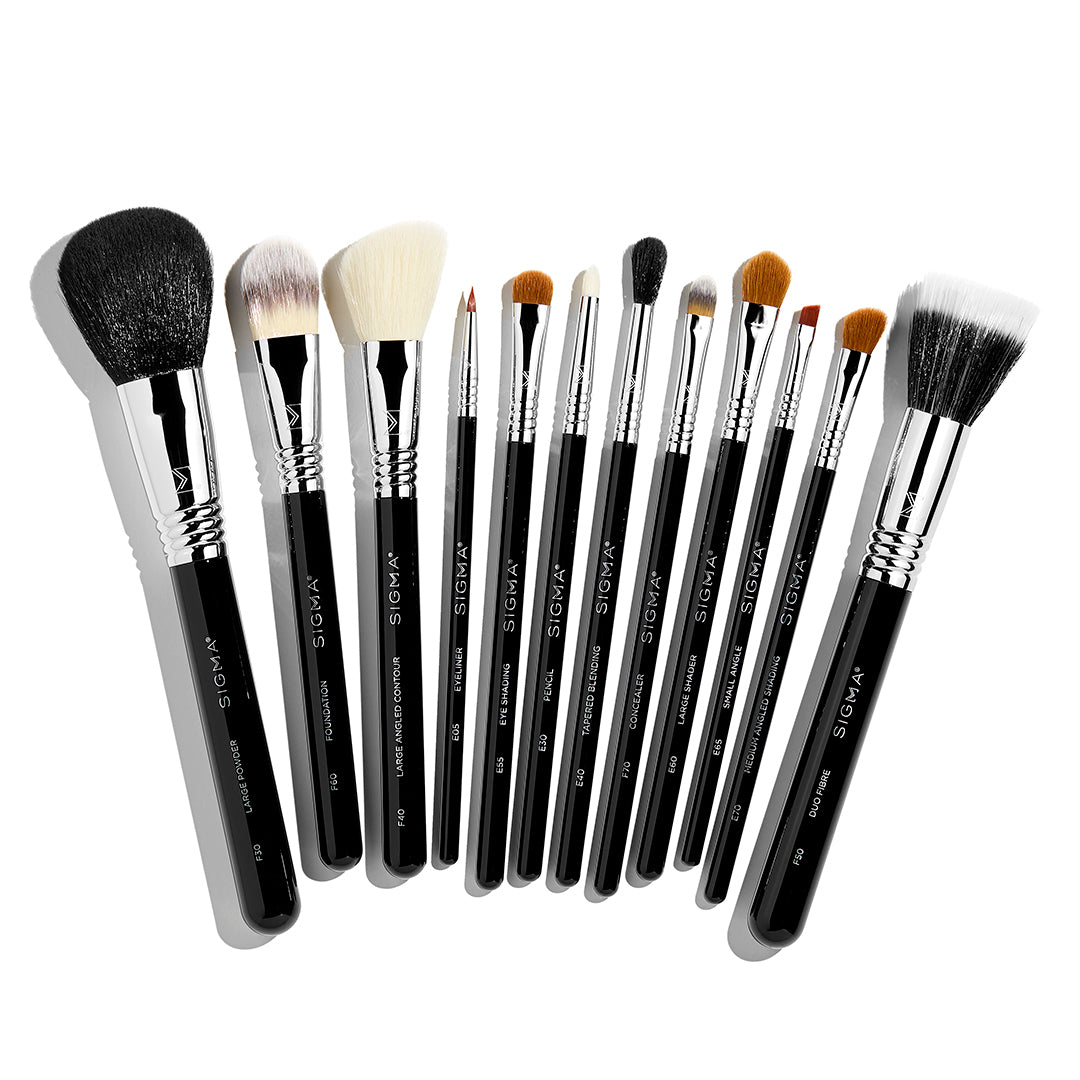
The Complete Beauty Enthusiast Kit
When you are ready to elevate your look, add these specialized tools:
- Invest in multiple blending brushes for advanced applications.
- Choose detail tools that enable greater precision and control.
- Search for specialty brushes that align with your distinct look.
How to Clean and Maintain Different Types of Makeup Brushes
Your makeup brush cleaning routine may vary based on the makeup brushes that you add to your collection. Brushes that you use to apply liquid or cream products should be cleaned on a weekly basis, while powder brushes can be cleaned every 2–4 weeks. Once your brushes have been washed, dry the brushes upside down to both protect the form of the bristles and prevent water from damaging the glue that adheres the handle to the brush.
FAQ
There are more than a dozen types of makeup brushes available, but the number of brushes that you need in your collection will depend heavily on your makeup style and daily routine.
A blending brush is used to support a thorough, even application, while a crease brush adds definition.
A kabuki brush is used to apply foundation and powders.
No, beginners do not need a full collection of makeup brushes. Rather, they should start with five basic brushes: a foundation brush, concealer brush, powder brush, blending brush, and shader brush.
Yes, synthetic makeup brushes have non-porous bristles that hold makeup better, allow for an even application, and can easily be maintained.
Find The Right Makeup Brush
The right tools will simplify your makeup routine while delivering exceptional results. By understanding brush shape and ability, you can build confidence as you develop a routine that supports your style. When you find the right makeup brush, invest in a well-constructed tool that will stand the test of time. Durable, waterproof makeup brushes allow you to get professional-looking results on a daily basis for years to come.
Sigma Beauty's award-winning makeup brushes feature innovative design styles that match your aesthetic while supporting your look. Our makeup brushes will stand the test of time and elevate your look for years to come. Learn more about our makeup brushes and find the right brush for you.