


How to Fix Cakey Makeup & Why Your Brushes Might Be the Issue
It's a problem that so many people face each morning. You've applied your makeup carefully, sticking to your best products and your tried-and-true routine, yet your foundation still looks thick, patchy, and textured. Cakey makeup is a common complaint, but it's not always caused by foundation alone. Your skincare routine and product amount matter, but the brushes you use can also play a major role in your final appearance.
For a smooth finish and refined look, consider Sigma Beauty makeup brushes. With intentional brush shapes and high-quality synthetic fibers, our makeup brushes support a seamless application. This guide will help you learn how to avoid cakey makeup and how to fix makeup separation when it happens, while also introducing you to the tools that will best support your style.
The easiest way to fix cakey makeup is to apply thinner layers, prep your skin properly, blend with a clean foundation brush, and avoid adding more product before reworking your makeup.
Why Does Makeup Look Cakey?
Foundation, concealer, or powder makeup that appears heavy, uneven, or visibly layered on the skin looks cakey, and it's one of the problems with makeup that frustrates people the most. Cakiness usually happens when products sit on top of the skin rather than blending into a smooth, skin-like finish.
Have you ever asked yourself, "Why does my makeup look cakey?" These are some of the factors that can contribute to this less-than-desirable finish:
- Using too much product.
- Lack of moisturizer or dry, uneven skin texture.
- Using the wrong makeup brush.
- Using a dirty makeup brush.
Even when you invest in a high-quality foundation that perfectly matches your skin tone and texture, the wrong tool can make your makeup harder to blend.
Signs Your Makeup Looks Cakey
Watch for these common signs that your makeup may be looking cakey:
- Foundation settles into fine lines or dry patches. Instead of blending seamlessly, the product clings to textured areas.
- Your complexion looks heavy or overly matte. Too much product or uneven application can leave skin looking flat rather than natural.
- You notice streaks or patchy coverage. This can happen when foundation isn't blended evenly or the wrong brush is used for the formula.
- The finish looks thick around the nose, chin, or smile lines. These areas tend to collect excess product and are often the first places where cakiness appears.
- Your foundation looks noticeable instead of skin-like. A well-matched, properly blended foundation should even out your complexion without drawing attention to itself.
If you're noticing any of these signs, your application technique or brush may be contributing to the problem.
Your Brush May Be Making Your Foundation Look Heavy
The makeup brush that you use will determine how much product gets picked up, where it is placed, and how evenly it blends. A dense brush may provide the coverage you are seeking, but using too much pressure can lead to a thick application. A low-quality brush may pick product up, but instead of blending, it may simply push foundation around your face. Coverage is important, but the goal is to create a controlled, even, buildable application.
Makeup Brush Mistakes That Cause Cakey Looks
Before you learn how to stop makeup from looking cakey, you have to know the root cause of thick, uneven foundation applications. These are a few of the most common mistakes:

Using Too Much Product on the Brush
Applying too much product initially can overload the brush bristles and lead to a streaky, heavy-looking finish. Instead, start with a small amount of foundation on your brush and build coverage in thin layers.

Buffing Too Aggressively
Harsh circular buffing only serves to emphasize dry patches. You can avoid this by pressing the product onto your brush first, then softly buffing the edges.

Using the Wrong Brush Shape
Brush shape and size have a significant impact on your final look. A large brush may put too much product in areas that need precision, while a small brush may lead to uneven layers.
Here's a look at the best makeup brushes depending on your goals:
- Flat kabuki brushes allow for a smooth foundation application.
- Rounded brushes are better for buffing.
- Angled brushes offer precision and are best for facial contours.
- Smaller brushes support targeted coverage.

Not Cleaning Your Brushes Often Enough
Without proper cleaning, your brush will hold onto foundation, concealer, oil, powder, and bacteria. That buildup prevents your brush from evenly applying makeup to your face. You should clean your brushes at least once a week, especially all complexion brushes.
How to Fix Cakey Makeup Without Starting Over
So you know that cakey makeup is a problem, but you may be wondering how to make your makeup look smooth. Here are a few simple steps you can take to revitalize your appearance:

Press the Skin With a Damp Sponge or Clean Brush
Using a clean tool, press your brush over textured areas to soften excess product. Avoid dragging the brush, as this can disturb the makeup underneath. A clean blending brush will diffuse edges without adding more product.

Mist and Re-Blend
Soften powdery areas by gently spraying a hydrating mist. Once it settles, you can gently press the makeup to achieve a smoother appearance. Try to avoid adding more foundation right away.

Remove Excess Product in Targeted Areas
Most often, you will notice cakey makeup around the nose, smile lines, chin, and under your eyes. A clean sponge can be used to lift away excess product.

Avoid Adding More Powder
It may be tempting to add more powder to smooth out the patchy areas, but that can actually make it worse. Instead, use a precise powder brush to address targeted areas.
How to Prevent Cakey Foundation Before It Happens
If you want to know how to make my makeup look smooth and not cakey, this is a routine that works well:

Prep Your Skin First
Begin your makeup routine with skin care. Use moisturizer, sunscreen, and primer to prep your skin, and let all products absorb before applying makeup.
Use Thin Layers of Product
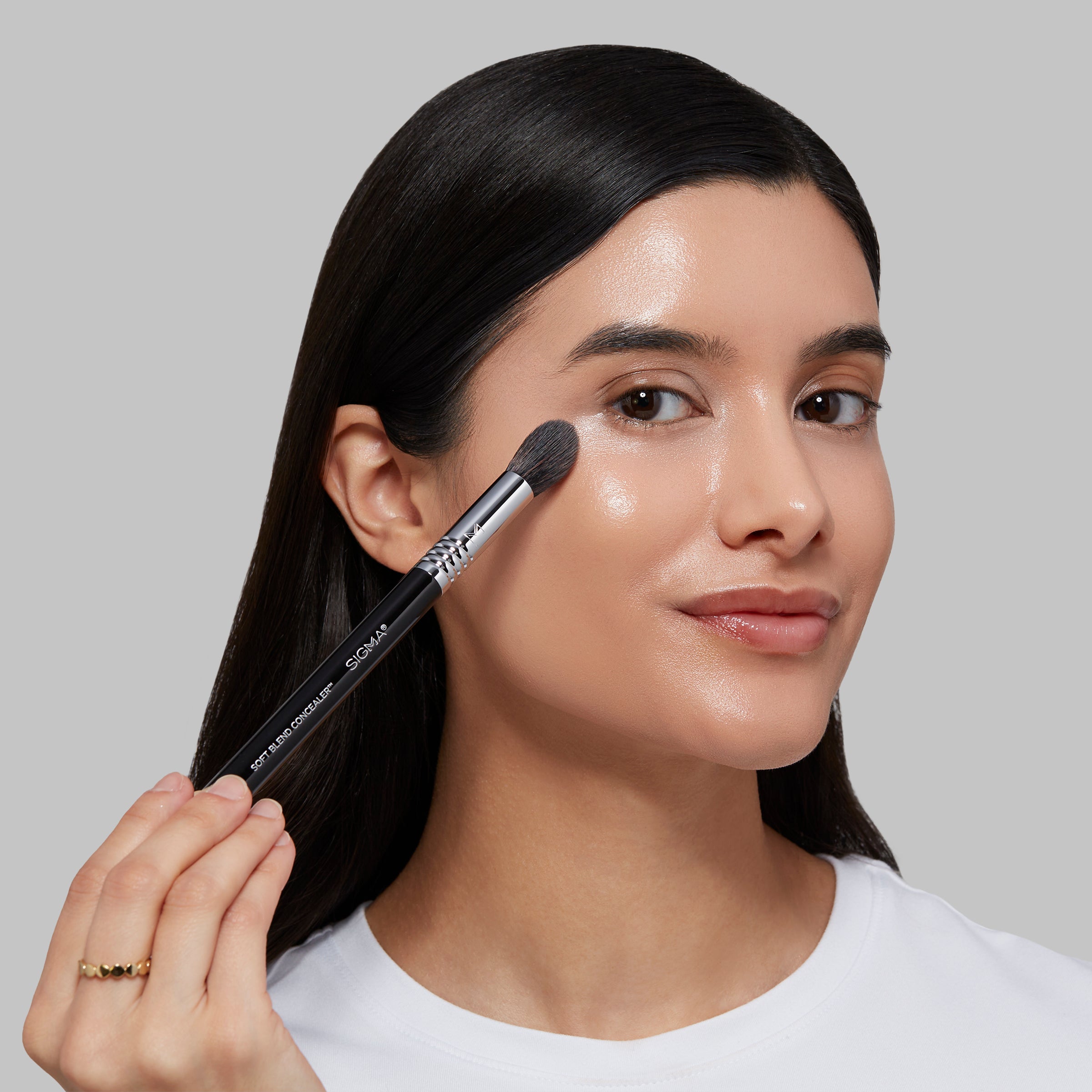
When you are ready to apply your foundation, start in the center of the face, where more coverage is typically needed. Then, blend outward to prevent buildup around the hairline or jawline. Professional makeup artists typically recommend building foundation in thin layers rather than applying full coverage all at once. This creates a smoother, more natural-looking finish and reduces the likelihood of cakey foundation.

Choose the Right Brush for Your Formula
The brush that you use depends on your preferred makeup formula.
- Choose dense synthetic brushes for liquid and cream foundations.
- Opt for a diffused brush for powder.
- Use a smaller brush for concealer.
Brush design and fiber quality will influence your final look.

Clean Your Brushes Regularly
Clean brushes are essential for an even application. Remember to clean complexion brushes regularly, as they touch liquid and cream makeup products as well as SPF and skin oils. The right brush care products can help you protect your investment in your makeup tools and allow you to achieve a flawless look.
Best Sigma Brushes for Smoother, Less Cakey Makeup
Depending on your makeup concerns, these are the makeup brushes that will work best:

For Full-Coverage Foundation: F80 Flat Kabuki™ Brush
The F80 Flat Kabuki™ Brush is good for buffing liquid or cream foundation and will distribute product evenly across the skin. Use light pressure and thin layers for the best results.

For Precision Blending: 3DHD® Kabuki Brush
The 3DHD® Kabuki Brush is designed to reach the curves and angles of the face, making it useful around the nose, under the eyes, and near the mouth. This is a solid option for blending makeup in problem areas where cakey makeup is common.

For Soft, Rounded Blending: F82 Round Kabuki™ Brush
The F82 Round Kabuki™ Brush offers a rounded shape that buffs product evenly, preventing harsh buildup. If you want a polished finish, this is an excellent tool to have in your makeup kit.

For Controlled Powder Application: Powder or Setting Brush
A controlled powder brush lets you apply makeup only where it's needed, such as on the T-zone.
Brush Technique Tips for a Smoother Finish
Knowing how to fix cakey foundation begins with the right brush, but the correct technique can lead to exceptional results. Use these tips to use your makeup brush better:
- Start with less product than you think you need.
- Apply foundation first, then blend with the brush.
- Use stippling motions to place product in the appropriate areas.
- Use light buffing to smooth edges.
- Avoid dragging the brush across dry patches.
- Build coverage in thin layers over time.
- Clean the brush weekly to prevent product buildup.
By combining skilled technique with premium makeup brushes, you can avoid most of the problems with makeup that people complain about.
FAQ
Your makeup may appear cakey because you are not using the right brush. Using high-quality makeup tools with the correct technique can lead to a seamless appearance.
Yes, dirty makeup brushes often have product buildup on them, which can create a streaky, thick makeup application.
The makeup brush that you use should depend on your goals. Flat kabuki brushes are best for a smooth foundation application, while rounded brushes are ideal for buffing. For targeted coverage, consider smaller, angled brushes.
You don't have to start over to fix cakey makeup. Instead, use a damp sponge to soften product, mist your face, and use a clean brush to re-blend. Avoid applying additional foundation.
You should clean your makeup brushes at least once per week, especially your complexion brushes, which come into contact with makeup product, skin oils, and sunscreen.
Better Brushes, Better Blending, Less Caking
Cakey makeup is genuinely frustrating, especially when you are using high-quality makeup, but the issue may not be your foundation alone. The right brush and an improved blending technique can make a major difference.
To create a smoother complexion routine, explore Sigma Beauty foundation brushes, face brushes, and brush cleaning tools. Before you know it, you will be enjoying the natural-looking, seamless results that you have been hoping for.