
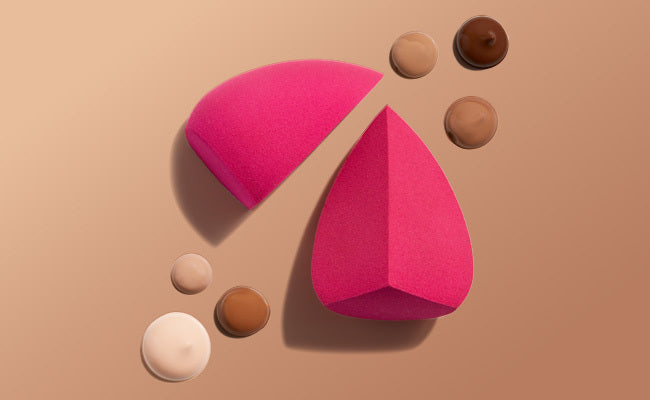


How to Find Your Perfect Foundation Shade
Purchasing makeup products requires precision and accuracy, particularly when you are trying to choose a foundation that matches your skin tone. When you have put the time and energy into shade-matching, it can be frustrating to find out that your foundation looks right in the bottle but wrong on your skin.
Selecting the correct shade depends on your skin's undertone, the current lighting, product formula, oxidation, and application. In addition, the brushes that you use can determine how the shade looks on your skin. Sigma's award-winning makeup brushes are a helpful tool for testing and blending foundation more evenly, providing a tried-and-true solution for finding the perfect foundation shade.
One of the most reliable ways to find your perfect foundation shade is to identify your skin tone and undertone, test foundation along your jawline in natural light, wait for oxidation, and blend with a clean foundation brush before making your final decision.
Why Finding the Right Foundation Shade Is So Hard
Learning how to choose a foundation shade is more difficult than you might think. A foundation shade finder can help, but in reality, foundation matching is not just about choosing light, medium, or deep tones. What looks right in the store on the foundation shade chart may perform completely differently depending on your skin undertone, store lighting, or screen settings.
These are some of the most common pitfalls when you rely on a foundation finder alone:
- You choose a shade that doesn't complement your undertone, which can make the foundation look yellow, pink, orange, gray, or ashy.
- You make a selection while in the store, and the lighting distorts the shade.
- You test a foundation without waiting for it to oxidize, and find out that it's warmer or darker than you expected once it's dry.
- You use lower-quality makeup brushes, which lead to an uneven application that makes the shade look less natural.
This step-by-step guide will help you discover how to choose foundation shade with confidence.
Step 1: Understand Your Skin Tone and Undertone
Before you can learn how to match foundation to your skin tone, you should get to know your own skin a little better. Assessing your skin tone and undertone allows you to select an accurate shade.
Skin Tone
Skin tone refers to the depth of your skin and is categorized as fair, light, medium, tan, deep, or rich. Your skin tone can shift slightly, depending on the season or the amount of sun exposure.
Undertone
Undertone refers to the subtle color that exists beneath your skin and is categorized as warm, cool, neutral, or olive.
- Warm undertones look golden, yellow, or peach.
- Cool undertones look pink, red, or blue.
- Neutral undertones look balanced between warm and cool tones.
- Olive undertones look green or golden-green.
Quick Undertone Checks
There are some clues that you can use to identify your undertone. For example, your vein color may indicate which undertone your skin has, or you may be able to determine undertone based on which clothing colors best flatter you.
The most effective test is to evaluate how foundation undertone looks when blended on your face, neck, and chest.
Step 2: Test Foundation in the Right Place
With a better understanding of which shade will best match your skin tone and undertone, you need to test your foundation makeup. Avoid relying on hand or wrist swatches, and instead, test foundation along your jawline. This allows you to compare the shade against your face, neck, and chest.
Many professional makeup artists recommend testing two or three similar foundation shades along the jawline instead of the wrist because the goal is to create a seamless transition between the face and neck. Test two or three close shades side by side for a true comparison, and check the shade in natural light. The best match should disappear into the skin once blended.
Step 3: Wait for Oxidation
Oxidation occurs when the pigment in the makeup interacts with the oils on your skin and the oxygen in the air. Sometimes, oxidation causes the foundation to change color after it dries, and some formulas may look darker, warmer, or more orange after 10 to 20 minutes. When testing foundation, wait for oxidation before making your final decision on a shade. You may be able to compare the fresh swatch to the dried-down result for an accurate assessment.
Step 4: Blend Before You Decide
Before you purchase, blend the foundation the way it would actually be worn. Using a clean foundation brush, apply a thin, even layer to your jawline. By blending effectively, you will be able to judge the depth, undertone, and finish of your foundation makeup. Be sure to use a fresh, clean brush, as dirty foundation brushes can affect shade accuracy by mixing old product into the new formula.
Best Sigma Brushes for Shade Testing and Blending
Using the right makeup brush for foundation can allow you to effortlessly choose a foundation shade. These are the best Sigma makeup brushes for shade testing and blending:

F80 Flat Kabuki™ Brush
The F80 Flat Kabuki™ Brush is best for liquid or cream foundation, as it blends the product in thin, even layers. It helps you see how the shade looks across larger areas of the face.

3DHD® Kabuki Brush
The 3DHD® Kabuki Brush is a helpful tool for blending around the nose, mouth, eyes, and facial contours, and allows you to check how the shade works in areas where foundation can collect.

F82 Round Kabuki™ Brush
The F82 Round Kabuki™ Brush works well for soft blending, smoothing out edges and leading to a seamless application.

Smaller Detail or Concealer Brushes
Smaller complexion brushes are a strong choice for targeted coverage to improve redness, discoloration, or blemishes. Using one of these brushes prevents you from applying too much foundation across the full face.
How to Shade Match Foundation Online
It is possible to choose the right foundation makeup online, but you will want to be intentional about your purchase. When you first begin looking into makeup products, compare shade descriptions, undertone labels, model photos, and reviews. Try to find reviewers with a similar skin tone and undertone to help you focus your search. You may be able to use current foundation matches from other brands as a reference, but avoid relying on product image alone.
Once your foundation is delivered, test it on your jawline at home and in natural light. Be sure to wait for oxidation, and always blend with a clean foundation brush.
What to Do If Your Foundation Shade Is Slightly Off
If you are still finding that your foundation shade is not quite right, it's still possible to achieve a flawless look. Small adjustments can often help you achieve a more natural-looking finish.
Here's what you can do to fix your foundation shade:
If It Is Too Light
Use bronzer to add warmth to your foundation, but be sure to blend carefully around the jawline and neck. Avoid over-powdering, as that can make the shade look flatter.
If It Is Too Dark
Use minimal product, and blend it out more sheerly with a round brush. You may be able to apply lighter concealer strategically in the center of the face to match it better to your current tone. If not, save the shade for the summer, especially if your skin tone changes seasonally.
If It Is Too Orange or Pink
In this case, the undertone may be wrong. Foundation that looks orange is often too warm for your complexion, while foundation that appears pink may be too cool. You may want to opt for a different shade, depending on the issue. Before you make another purchase, re-test the new foundation shade in natural light to confirm it's a better choice.
Common Foundation Shade Matching Mistakes
Finding your perfect foundation shade can take a little trial and error. If your match doesn't look quite right, one of these common missteps could be the reason:
- Skipping your undertone. Your skin's undertone plays a big role in finding a natural-looking match.
- Swatching on your wrist or hand. Test foundation along your jawline to see how seamlessly it blends with both your face and neck.
- Not giving the formula time to dry. Some foundations oxidize slightly after application, so wait a few minutes before deciding on your shade.
- Relying only on artificial lighting. Check your foundation in natural light whenever possible for the most accurate color match.
- Applying with a brush that needs cleaning. Product buildup on your brush can affect both the color and finish of your foundation. Clean tools help ensure a truer match and smoother application.
- Choosing a shade based only on photos. Images can vary depending on lighting and editing, so whenever possible, use shade guides, swatches, or multiple references to help narrow down your best match.
The Secret to a Better Foundation Match Is Better Blending
Knowing how to find your foundation shade depends on more than choosing the right bottle or comparing swatches. The perfect foundation shade for you should match your skin tone and undertone while aligning with the realities of daily wear.
Instead of relying on a foundation shade chart, test the foundation in natural light, wait for oxidation, and blend with a clean Sigma foundation brush. This will give you an accurate idea of what the foundation will look like on your skin, letting you uncover your just-right foundation makeup.
Ready to perfect your foundation routine? Shop Sigma foundation brushes, explore face brushes and brush sets, and check brush care tools to make shade testing, blending, and everyday application easier.
FAQ
For the most natural-looking result, your foundation should blend seamlessly between your face and neck. Testing along your jawline helps you find a shade that creates a smooth transition without looking too light or too dark.
Look at your skin in natural light. Cool undertones typically have pink, red, or blue hues, warm undertones have golden or yellow hues, and neutral undertones are a balance of both. Identifying your undertone can help you choose a foundation shade that looks more natural.
Foundation may appear orange if the shade is too warm for your undertone or if the formula oxidizes after application. Always let foundation dry for a few minutes before evaluating the color, and check the shade in natural light whenever possible.
Ideally, neither. Foundation should closely match your skin tone to create an even, natural-looking complexion. If you're between shades, testing along the jawline can help you determine which one blends best.
Yes. Many brands offer online shade finders and comparison tools that can help narrow down your options. For the most accurate match, compare your current foundation shades, identify your undertone, and review swatches in multiple lighting conditions.